

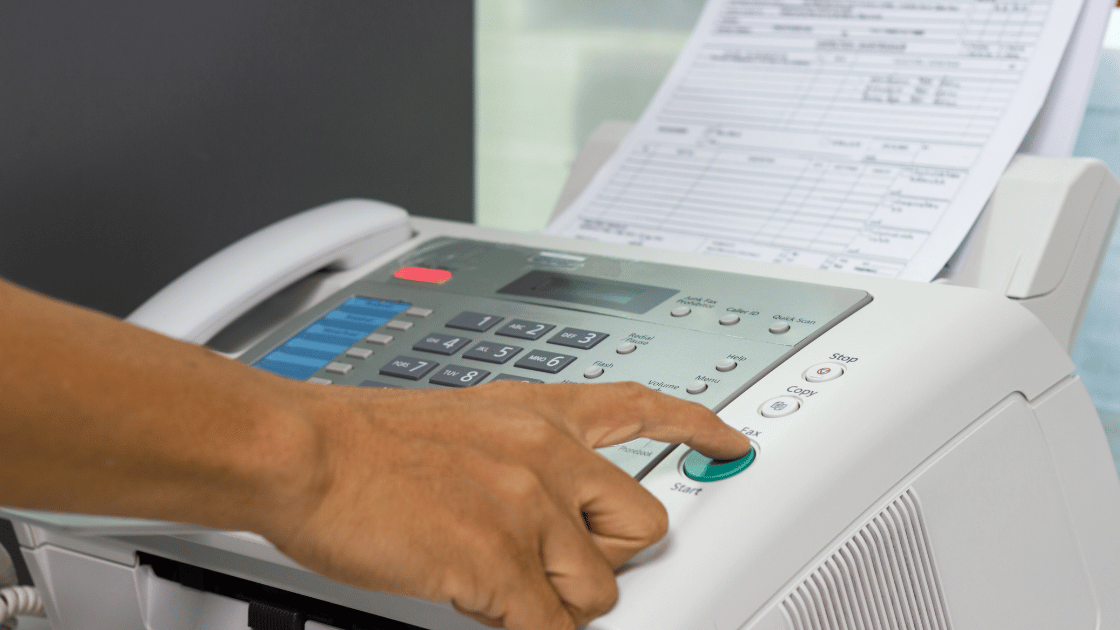
When you think of cyberattacks, you probably imagine phishing emails, ransomware, or malware injections—not a fax machine. Yet, sending and receiving faxes attacks remain a real and underestimated security risk in today’s digital landscape.
Despite their age, fax machines and online fax services are still widely used in industries like healthcare, finance, and government due to compliance requirements. However, their outdated protocols and weak integrations make them an attractive target for attackers.
This guide explores how fax-based attacks work, why they matter, and how modern organizations can defend against them—especially with the help of artificial intelligence (AI).
What Are Fax Attacks?
Fax attacks refer to cyber threats that exploit vulnerabilities in the process of sending and receiving faxes, whether through traditional fax machines, multifunction printers (MFPs), fax servers, or fax-to-email services.
Key attack vectors include:
-
Maliciously crafted fax transmissions that execute code on devices.
-
Exploiting outdated communication protocols like T.30 and T.38.
-
Fax-to-email gateways that bypass email filters.
-
Weak authentication mechanisms in fax infrastructure.
Because many organizations assume faxes are inherently secure, attackers exploit this misplaced trust.
How Fax Attacks Work
Fax attacks follow a predictable but effective path:
-
Malicious Transmission – An attacker sends a fax containing specially crafted code.
-
Exploitation of Protocols – Legacy protocols fail to validate data, allowing the code to run.
-
Device Compromise – Fax-enabled multifunction printers or servers are compromised.
-
Network Entry – Once inside, attackers pivot to broader network systems, stealing data or deploying ransomware.
Fax-to-email services also add risk. Since faxed files are delivered as email attachments, malware can bypass normal security filters disguised as legitimate fax documents.
Real-World Cases of Sending and Receiving Faxes Attacks
One of the most well-documented examples came from Check Point’s 2018 research, which demonstrated how attackers could exploit vulnerabilities in HP multifunction printers. By sending a malicious fax, researchers gained remote access to the device and used it as a gateway to the entire network.
Healthcare organizations are particularly at risk, since fax remains heavily used under HIPAA regulations. Sensitive patient data transmitted over insecure fax channels is a prime target for cybercriminals.
Even in government and finance, fax remains embedded in workflows, creating a hidden but exploitable attack surface.
AI Overview: Role of Artificial Intelligence in Preventing Fax Attacks
Artificial intelligence can transform how organizations secure fax communications:
-
Anomaly Detection – AI monitors fax traffic, spotting unusual patterns that suggest malicious behavior.
-
Threat Identification – AI engines analyze fax-to-email attachments, detecting malware that traditional filters might miss.
-
Predictive Security – Machine learning models forecast likely attack vectors, enabling proactive defenses.
-
Automated Patching – AI-driven monitoring ensures devices like MFPs remain updated and secure.
By combining AI with traditional defenses, businesses can close security gaps that attackers exploit in fax systems.
Why Fax Attacks Are Dangerous for Businesses
Fax-based threats carry significant risks:
-
Access to Sensitive Data – Financial records, healthcare information, and government documents.
-
Network Compromise – Once inside via fax devices, attackers move laterally.
-
Compliance Violations – Noncompliance with HIPAA, GDPR, or PCI DSS can lead to fines.
-
Reputation Damage – A breach caused by a “simple fax” can undermine customer trust.
For regulated industries, ignoring fax security can mean both financial and operational fallout.
How to Detect Fax-Based Attacks
Detection requires vigilance and layered defenses. Signs include:
-
Unusual spikes in fax traffic.
-
Fax devices restarting unexpectedly.
-
Security alerts from IDS/IPS systems.
-
Suspicious or corrupted files delivered via fax-to-email gateways.
Enterprises should integrate fax systems into broader SIEM (Security Information and Event Management) platforms for real-time visibility.
Security Best Practices to Prevent Fax Attacks
Organizations can reduce fax-related risks with these measures:
-
Segment Fax Devices – Place fax machines and MFPs on isolated networks.
-
Keep Firmware Updated – Regularly apply vendor patches for fax-enabled devices.
-
Encrypt Fax Transmissions – Especially when using fax-to-email services.
-
Deploy IDS/IPS – Monitor network activity for signs of exploitation.
-
Train Employees – Raise awareness that fax documents can contain malware.
Advanced Strategies for Enterprises
For large organizations, stronger measures are needed:
-
Migrate to Digital Alternatives – Transition from traditional fax to secure, encrypted document exchange platforms.
-
AI-Driven Monitoring – Use ML-based tools to monitor fax traffic continuously.
-
Zero Trust Security – Apply “never trust, always verify” to all connected devices, including fax.
-
Vendor Risk Management – Audit fax service providers for compliance and security standards.
Fax may be legacy technology, but it requires modern defenses.
The Future of Fax Security
Fax use is declining, but it persists in industries bound by regulation. The future will likely see:
-
AI-Powered Defenses – Continuous scanning of fax communications.
-
Cloud-Based Secure Faxing – Providers offering end-to-end encryption.
-
Transition to Digital – More organizations replacing fax with secure document-sharing solutions.
Ultimately, fax security will evolve alongside broader enterprise security frameworks, blending AI, Zero Trust, and digital transformation.
FAQs: Sending and Receiving Faxes Attacks
Q1: What are sending and receiving faxes attacks?
They are cyber threats that exploit fax devices, servers, or fax-to-email services to deliver malware or gain network access.
Q2: How do fax-based attacks work?
Attackers send maliciously crafted faxes that exploit vulnerabilities in communication protocols or fax-enabled devices.
Q3: Are fax attacks still relevant today?
Yes. Fax remains widely used in healthcare, government, and finance, making it a persistent risk.
Q4: How can AI help prevent fax attacks?
AI detects anomalies in fax traffic, scans attachments for malware, and ensures timely patching of devices.
Q5: What industries are most at risk from fax-based threats?
Healthcare, finance, and government agencies are most exposed due to regulatory reliance on fax.
Q6: How can organizations secure their fax systems?
By segmenting fax networks, updating firmware, encrypting transmissions, and using AI-driven monitoring.
Q7: Should businesses replace fax with digital alternatives?
Yes. Transitioning to secure digital document exchange reduces attack surfaces significantly.
Conclusion
While fax may feel like a relic of the past, it remains embedded in modern workflows—and attackers know it. Sending and receiving faxes attacks exploit overlooked vulnerabilities, providing a backdoor into sensitive systems.
Enterprises must treat fax machines, servers, and online fax services as part of their broader security strategy. By adopting AI-driven monitoring, Zero Trust frameworks, and proactive employee training, businesses can protect against these unexpected yet potent threats.
Action Step: Audit your organization’s fax infrastructure today. Patch devices, encrypt transmissions, and explore secure digital alternatives to stay ahead of attackers.