

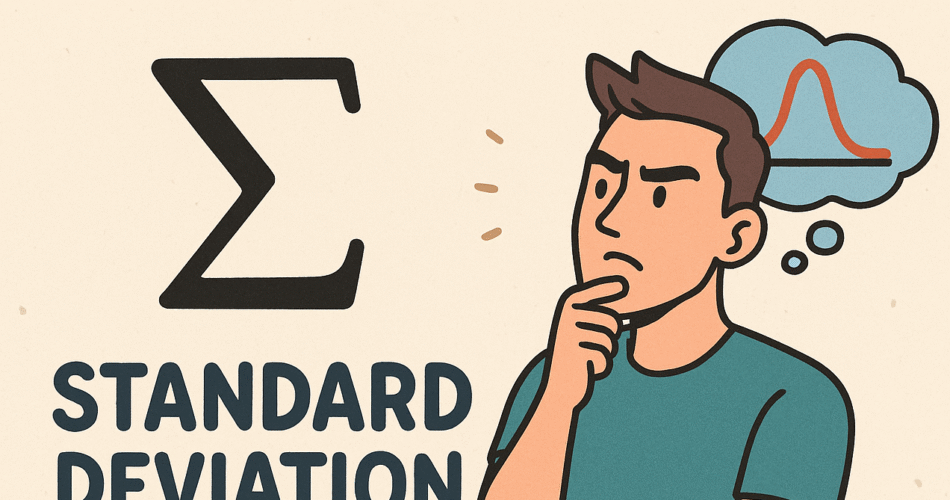
What does sigma actually mean? If you’ve scrolled through online forums, corporate boardrooms, or cybersecurity whitepapers, chances are the word “sigma” popped up in vastly different contexts. For some, sigma meaning refers to the “Sigma male” personality type. For others, it represents the Six Sigma methodology in business. Cybersecurity specialists, however, may think first of Sigma rules in security detection frameworks.
This layered meaning makes sigma one of those fascinating terms that travel between disciplines—blending language, business, psychology, and technology. In this article, we’ll break down sigma meaning across these areas and explain why it matters to professionals, leaders, and security experts.
Origins of the Term Sigma
Sigma in Greek Alphabet
At its root, sigma is the 18th letter of the Greek alphabet, symbolized as Σ (uppercase) or σ (lowercase). In mathematics and science, it frequently represents summation or “standard deviation”—the measure of variation in statistics. This academic foundation explains why sigma meaning is often tied to data, measurement, and precision.
Sigma in Statistics and Data Science
Statisticians use sigma (σ) to denote variability in datasets. In simple terms, when data points are closer to the mean, the sigma value is lower. Conversely, large sigmas suggest greater variability. This is crucial in fields like data science, finance, and cybersecurity analytics, where measuring risk and anomalies is critical for decision-making.
Six Sigma in Business Process Improvement
Popularized by Motorola and General Electric in the 1980s, Six Sigma is a methodology designed to reduce errors and streamline efficiency. The term describes a system where processes are designed so that errors occur less than 3.4 times per million operations. Business leaders embraced this framework to increase profit margins, improve quality, and boost innovation.
Sigma Meaning in Modern Psychology and Social Context
Sigma Male Archetype and Online Culture
In recent years, sigma meaning expanded into pop psychology, thanks to online communities coining the “Sigma male” archetype. Unlike alphas, who thrive on dominance, sigmas are framed as independent loners—confident, self-reliant, and outside social hierarchies.
This archetype has gone viral on platforms like TikTok and Reddit, sparking discussions about masculinity, independence, and unconventional leadership styles.
Sigma vs. Alpha: A Comparative Look
-
Alpha male: Assertive, dominant, thrives in group leadership.
-
Sigma male: Quietly competent, thrives independently, avoids hierarchies.
While some see the sigma archetype as glorifying detachment, many professionals—especially entrepreneurs and creators—find the sigma mindset empowering, as it aligns with strategic independence.
Why the Sigma Archetype Resonates Today
Modern society values autonomy, flexibility, and digital independence. Remote work, freelancing, and solopreneur ventures reward sigma-like traits. For cybersecurity specialists and CEOs, operating outside rigid structures can be an asset in unpredictable environments.
Sigma in Cybersecurity and Information Security
Sigma Rules and Threat Detection Frameworks
Within cybersecurity, sigma meaning refers to Sigma rules—a generic and open detection framework. Much like how Snort or YARA rules allow for intrusion detection, Sigma rules make it easier to define patterns for SIEM (Security Information and Event Management) systems.
For example, Sigma allows security operations teams to:
-
Translate standardized detection rules across platforms.
-
Identify abnormal log events efficiently.
-
Share rule templates across industry peers.
How Cybersecurity Professionals Use Sigma
Security engineers rely on Sigma rules to unify and simplify threat detection. Instead of rewriting complex vendor-specific detections, analysts use Sigma’s universal language. This speeds up incident response and reduces risks of misinterpretation in critical environments.
Future of Sigma in Security Operations
As cyber threats get stealthier, Sigma frameworks are becoming indispensable. Expect to see tighter integration with machine learning-driven SIEM systems, automated threat intelligence sharing, and predictive modeling. For online security professionals, mastering Sigma rules is becoming as essential as knowing basic encryption protocols.
Business Leadership and the Sigma Mindset
Sigma as a Model of Independent Leadership
Beyond male archetypes and cybersecurity frameworks, sigma thinking embodies self-reliant strategy. Leaders with a sigma mindset operate outside traditional corporate echo chambers. They often adopt contrarian approaches that give them an edge.
Lessons for CEOs and Founders
-
Avoid dependency on rigid hierarchies.
-
Trust data, but also intuition, when making disruptive decisions.
-
Create operational frameworks (similar to Six Sigma) that minimize inefficiencies.
Strategic Advantages of Sigma Thinking
Founders who adopt sigma approaches often thrive in industries where adaptability matters more than scale. Cybersecurity startups, for example, succeed when they detect threats differently—not just faster.
Common Misconceptions About Sigma
Sigma as Trend vs. Reality
Some critics argue the sigma identity is an internet meme, not a serious personality model. While this is true to an extent, the popularity suggests deeper cultural needs for non-traditional leadership models.
Misuse of Six Sigma in Business Jargon
Companies sometimes misuse Six Sigma as a buzzword for “efficiency” without committing to actual process rigor. This devalues the true methodology.
Pop Culture Interpretations
From motivational YouTube shorts to viral TikToks, sigma meaning is often oversimplified as “quiet loner who’s strong.” Reality is much more nuanced. In business, security, and psychology, sigma has richer implications.
Applying Sigma Meaning to Personal Growth and Strategy
Sigma Traits for Career Development
Adopting sigma-inspired behaviors can improve professional growth:
-
Practice independence in problem-solving.
-
Stay resilient in volatile environments.
-
Avoid over-dependence on traditional hierarchies.
Practical Examples in Decision-Making
-
Cybersecurity analyst: Applies Sigma rules to streamline detection rather than reinvent the wheel.
-
Founder: Adopts Six Sigma principles to reduce waste in product delivery.
-
Individual: Embodies sigma independence when pursuing creative work outside corporate norms.
Actionable Takeaways
-
Learn statistical sigma to measure and communicate data-driven insights.
-
Adopt Six Sigma practices to eliminate inefficiency.
-
Understand Sigma rules in cybersecurity to future-proof your security strategy.
-
Reflect on sigma independence for personal and leadership development.
Final Thoughts on Sigma Meaning
The term sigma is like a prism—it refracts multiple meanings depending on perspective. From statistics to psychology, cybersecurity to business leadership, the concept of sigma continues to evolve. Whether you’re a CEO, a cybersecurity analyst, or a curious reader exploring online culture, sigma meaning offers insights on independence, precision, and adaptability.
FAQs on Sigma Meaning
Q1. What is the core sigma meaning?
Sigma originally comes from the Greek alphabet but today refers to statistical measurement, Six Sigma methodology, the sigma male archetype, and cybersecurity detection rules.
Q2. What does sigma mean in personality types?
It describes an independent, self-reliant personality often contrasted with the alpha archetype.
Q3. How is sigma used in cybersecurity?
Sigma provides a detection rule framework that simplifies identifying suspicious log events in SIEM systems.
Q4. What is the difference between Six Sigma and sigma male?
Six Sigma is a business efficiency methodology, while the sigma male archetype refers to a socially independent personality concept.
Q5. Why is sigma important in leadership?
Because leaders who embody sigma-style independence can adapt faster, avoid herd mentality, and often innovate beyond traditional boundaries.
Q6. Is Six Sigma still relevant in 2025?
Yes. Many enterprises continue to use Six Sigma principles to standardize processes, cut waste, and ensure global operational excellence.
Q7. How can professionals adopt sigma traits?
By combining independence with data-driven insights, embracing continuous improvement, and aligning cybersecurity strategies with the Sigma framework.